
Visas, Permits and the Paperwork Nobody Warns You About
Pakistan is much easier to visit than most travellers expect. Most nationalities get a tourist visa in a few days through an official online system, and eligible passports can get one on arrival. What does catch people out is the second layer of paperwork: the No Objection Certificate needed for Gilgit-Baltistan, and the trekking permits for restricted mountain areas. Miss those and you can be turned back at a checkpost hours from Skardu.
This guide explains both layers, in the order you will meet them. Visa rules do change, so treat this as preparation and confirm current requirements on the official government site before booking non-refundable flights. Our visa and payment page covers the process alongside booking and payment options.
Layer One: Your Pakistan Tourist Visa
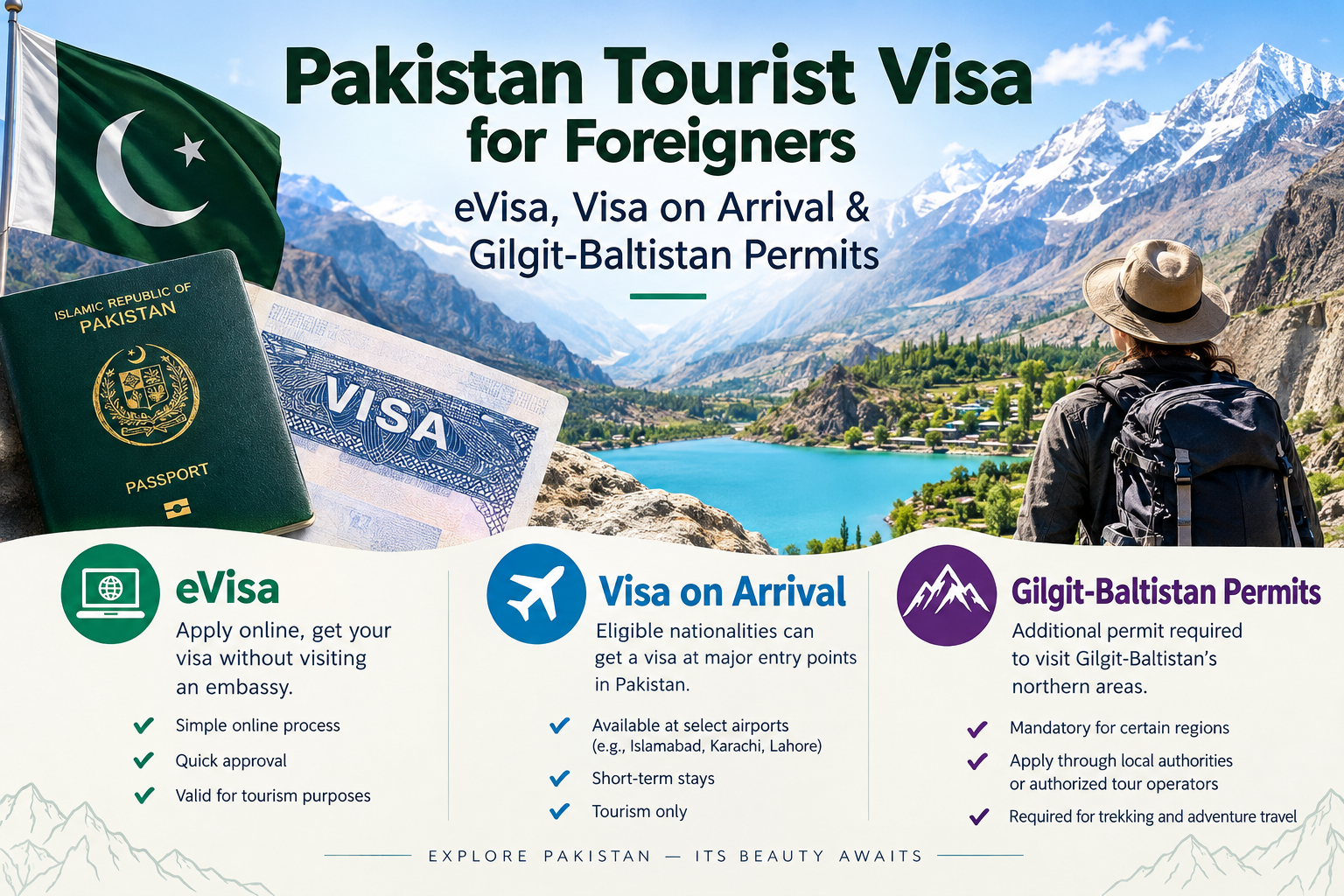
Option 1: Tourist eVisa
Most nationalities should start here. The official Pakistan Online Visa System at visa.nadra.gov.pk handles tourist eVisas digitally, with no embassy appointment and no courier.
- Open the official system at visa.nadra.gov.pk and choose the tourist visa category.
- Complete the online form with your passport details, intended dates and itinerary.
- Upload your documents: passport scan, photograph, itinerary and proof of return travel.
- Pay the visa fee online with a debit or credit card.
- Receive approval by email, usually within 7 to 10 working days. Print it and carry it with your passport.
Apply at least three weeks before you fly, longer in peak trekking season. A rejected or delayed application with a non-refundable airline ticket behind it is an expensive problem.
Option 2: Visa on Arrival
Nationals of many eligible countries can obtain a tourist visa on arrival at major international airports including Islamabad, Lahore and Karachi. Eligibility, permitted stay length and supporting documents are determined by Pakistan Customs and the current rules, so check the official position for your nationality before you travel.
Visa on arrival is genuinely useful as a backup if your eVisa is delayed, but do not treat it as your only plan. The rules change, eligibility is not universal, and arriving at a Pakistani airport with an unresolved visa status is not a good place to be negotiating.Documents to Prepare
Have these ready before you start, because you will be asked for most of them twice.
- Passport valid for at least six months beyond your departure date, with two blank pages
- Recent passport photograph, digital and printed
- Full travel itinerary with intended arrival and departure dates
- Return or onward flight confirmation
- Proof of accommodation, or an invitation letter
- Proof of funds or a bank statement where requested
- Travel insurance covering high altitude trekking, if trekking above 3,000 metres
Our Pakistan travel guide covers flights and what to expect once you land.
Layer Two: Gilgit-Baltistan NOC and Trekking Permits
This is the part that catches first-time visitors, and it applies whether you are going for two weeks or two days.
Foreign tourists entering Gilgit-Baltistan need a No Objection Certificate. The region sits on a sensitive border, and the NOC is the permission required for foreign nationals. Skardu, Hunza, Nagar, Ghizer, Deosai and the Karakoram Highway passes all fall inside it.
Trekking and mountaineering permits apply on top of that. Routes crossing restricted zones, and expedition climbing above 5,000 metres, need additional approval. Requirements change, so confirm the current position for your route.
In practice, the NOC and permits are arranged locally by your operator. That is the biggest practical reason to book with a registered local company rather than DIY. A guide and a permit are also a legal requirement in many trekking areas.
We arrange the NOC and all trekking permits as part of your package, which is why Fairy Meadows, Deosai and every expedition we run include them.
Where You Fly and How You Reach the Mountains
Most visitors fly into Islamabad International Airport and connect onward. The standard northern routes are:
- The Karakoram Highway, around 12 to 15 hours by road to Skardu or Hunza. Long, but the most reliable option, with spectacular scenery the whole way.
- Domestic flights to Skardu or Gilgit, roughly 45 to 60 minutes. Weather dependent and frequently cancelled.
Never book an international connection on the same day as a domestic flight to Skardu or Gilgit.
For a combined Skardu, Hunza and Deosai route, our 14-day Gilgit-Baltistan tour handles transfers, permits and flights as one package.
Paying for Your Trip From Abroad
Paying a Pakistan-based operator from outside the country is straightforward once you know the methods.
- International bank transfer is most common, and standard for expedition deposits.
- PayPal is widely used for smaller balances.
- Credit or debit card is accepted for visa fees and, where offered, tour payments.
- Inside Pakistan, bank transfer, JazzCash, Easypaisa and cash in Rupees are normal.
Expeditions normally require a deposit to confirm the team, guides and permits, with the balance due closer to departure. All current methods are on our visa and payment page.
Border Areas to Avoid
As a visitor you should not be near the Afghanistan border in the north-west, particularly the Khyber agency area. Travel advisories from most Western governments advise against travel there. Peshawar sightseeing is in the city itself, not the tribal areas.
Visa and Permit FAQ
Can I get a Pakistan visa on arrival?
Nationals of many eligible countries can obtain a tourist visa on arrival at major airports. Confirm current eligibility and required documents before relying on it.
Do I need a separate permit for Gilgit-Baltistan?
Yes. Foreign visitors to Gilgit-Baltistan need a No Objection Certificate, plus a guide, and additional permits for some trekking and mountaineering routes.
How long does an eVisa take?
Usually 7 to 10 working days from a complete application. Apply at least three weeks ahead, longer in peak season.
Do I need travel insurance?
Strongly recommended, and essential for trekking. Choose a policy covering high altitude, trekking above 3,000 metres and helicopter evacuation.
Start Your Application Early
The visa itself is the easy part. What shapes your trip are the NOC, the permits, the flights into Skardu, and having someone on the ground who knows current requirements.
Send us your nationality, passport country and intended dates, and we will tell you exactly which visa route applies, which permits your itinerary needs, and what it takes to pay for it from where you are. Our team is on WhatsApp at +92 346 9750335.
Before you go, read our Northern Pakistan packing guide and, if you are heading high, our guide to altitude sickness and acclimatisation.